Instagram Ads Guide 2026: How to Run High-Converting Ads Using AI
Last Updated: 6 Feb 2026

Instagram continues to shape buying decisions in ways few platforms can match. In 2026, Instagram ads sit at the centre of digital growth for brands that want attention and sales from the same channel.
Business owners now find a platform guided by automation and creative intelligence rather than guesswork. Advertising on Instagram has become more structured, more measurable, more creative, and far more competitive.
This shift explains why businesses across India now focus on how to run Instagram ads with clarity rather than instinct. The platform no longer rewards trial and error.
GrowEasy fits naturally into this new way of working. It helps teams plan Instagram paid ads, choose the right types of Instagram ads, and learn how to advertise on Instagram without dealing with complex dashboards or technical confusion. This Instagram ads guide shows how brands in 2026 use AI to launch campaigns faster, control spending better, and turn attention into steady growth.
Introduction to Instagram Ads
At its core, Instagram ads are paid posts created through Meta’s ad system and delivered inside the Instagram app. Brands choose who sees the ad, how much they spend, and what action they want.
What Instagram Ads Are and How They Work?
An Instagram ad looks similar to a regular post, with one clear difference. It reaches people who do not follow the brand yet. This explains why Instagram paid ads attract new audiences faster than organic posts alone. Here is how Instagram ads usually work:
- A business selects an objective such as website visits, messages, or purchases.
- The ad system matches the content with users likely to engage.
- The Instagram ad appears in natural browsing spaces
- Performance data guides future campaigns and helps refine how to advertise on Instagram.
Paid Placements Across Feed, Stories, Reels, and Explore
Brands can run Instagram ads across multiple sections of the app, each with a different user mood and behaviour. Common placements include:
- Feed ads that appear while users scroll through daily updates.
- Story ads that show between short and full-screen stories.
- Reel ads designed for fast-paced video viewing.
- Explore ads that reach users searching for fresh content.
These options make it easier to choose types of Instagram ads that match business goals.
How Do Ads Blend with Organic Content?
People scroll Instagram for stories, reels, and updates that feel personal. Instagram ads work best when they follow that same rhythm.
Most Instagram ads copy the visual language of regular posts. They use vertical videos, casual captions, and everyday settings that match what users already watch and like.
The small “Sponsored” label keeps things transparent, while the content itself feels native.
- Native design: Ads reflect user-generated content styles with clear visuals, and full-screen formats that suit mobile viewing. This style supports smoother advertising on Instagram.
- Boost top organic posts: Brands often turn high-performing posts into ads. These posts already have likes and comments, which build trust and improve results for Instagram paid ads.
- Consistency in tone: Captions, visuals, and messaging stay aligned with regular posts. This keeps the experience familiar and helps users engage without hesitation.
- Leverage content formats: Stories and Reels appear naturally during daily scrolling. These placements suit brands deciding between different types of Instagram ads.
- Using influencers: Influencer-created posts feel personal and relatable. When promoted, they support trusted voices rather than direct brand messaging.
What Are Instagram Ads? Sponsored Posts vs Organic Posts
An Instagram ad is a paid post that appears inside the feed with the same look and feel as regular content. Brands use these posts to reach people who do not follow them yet.
Sponsored Posts vs Organic Posts
The gap between sponsored and organic content becomes clear once you see how each one performs. Both play different roles in advertising on Instagram, and each supports a different stage of brand growth.
Key differences between sponsored and organic posts:
- Cost: Organic posts cost nothing to publish. Sponsored posts require a set budget for visibility.
- Reach and targeting: Organic reach stays close to followers and hashtag searches. Sponsored posts reach new audiences using age, location, and interest filters.
- Speed and results: Sponsored posts bring fast visibility and measurable traffic. Organic posts grow trust gradually.
- Appearance: Sponsored posts carry a “Sponsored” label. Organic posts appear naturally in feeds.
- Goal: Organic content builds loyalty. Sponsored posts support launches, offers, and campaigns.
Brands usually rely on organic posts for daily updates and community interaction. Sponsored posts fit better when teams plan campaigns, product launches, or targeted growth.
Where Do Instagram Ads Appear?
Ads appear in spaces where people already spend time. This placement strategy explains why an ad rarely feels intrusive.
Common ad placements include:
- Feed posts that appear during normal scrolling
- Story ads that show between user stories
- Reel ads placed inside short video content
- Explore ads shown while users search for new ideas
Why Instagram Ads Matter in 2026?
By 2026, Instagram ads serve as a revenue engine rather than a branding add-on. With three billion active users, the platform connects discovery, interest, and purchase in one place. Short videos, shoppable posts, and in-app checkout have turned Instagram paid ads into direct sales tools.
Several changes explain this shift:
- AI-driven targeting: The platform now relies on advanced automation that reduces manual work and improves return on spend.
- Social commerce growth: Reels and Stories allow users to move from viewing to buying in seconds.
- Algorithm changes: Organic reach has become harder, which pushes brands towards paid visibility.
- High-intent formats: Video-led ads show products in use, which suits visual-first buying behaviour.
- Personalised delivery: Ads match user interests and behaviour, which increases relevance and response.
Types of Instagram Ad Formats You Need to Know in 2026
Every scroll on Instagram carries a rhythm. Some posts make people pause, some invite a swipe. This rhythm comes from choosing the right types of Instagram ads.
1 Image Ads: Simple, Cost-Effective, and Built for Recall
Image ads remain one of the most accessible types of Instagram ads. A single strong visual can carry an idea without needing motion or sound. Brands often use this format for reach, recall, and brand presence.
A strong example comes from McDonald's. One of their summer image ads skipped logos and product names entirely.
A familiar colour palette and visual cue did the work. The ad marked the start of summer and kept the brand visible without pushing a sale. This style works well for advertising on Instagram when the aim is familiarity rather than clicks.
User-generated content adds another layer to image ads. A simple post styled like a meme or a screenshot can feel more relatable than polished creatives.
An ad from Uber used a tweet screenshot that matched the tone of popular meme accounts. People shared it, saved it, and reposted it. That sharing behaviour extended reach without extra spend.
Image ads often work best when they use:
- Clean visuals with a single idea.
- Real reviews, testimonials, or screenshots.
- Content that feels native to the feed.
2 Video Ads (Feed and Reels): Stories That Lead to Action
Video ads carry emotion, context, and movement. In 2026, Instagram video ads remain one of the most effective types of Instagram ads, especially when brands use Video ads generators to explain products quickly while keeping attention intact.
A strong case comes from RedPro USA, a brand focused on pool safety barriers. Their video ads linked straight to Instagram Direct and invited viewers to start a conversation. This approach shifted focus from cold outreach to direct dialogue. The outcome included year-on-year sales growth and a strong lead-to-conversion ratio.
Video ads work well when brands:
- Show products in real use.
- Guide viewers towards messages or enquiries.
- Keep videos short and focused.
3 Carousel Ads: Multiple Stories in One Scroll
Carousel ads allow brands to share more than one visual in a single placement. Users swipe through images or videos, which increases time spent on the ad. This format fits brands with stories, features, or collections to show.
Expedia used carousel ads for its Unpack ’26 campaign. Each card showed a destination expected to gain popularity.
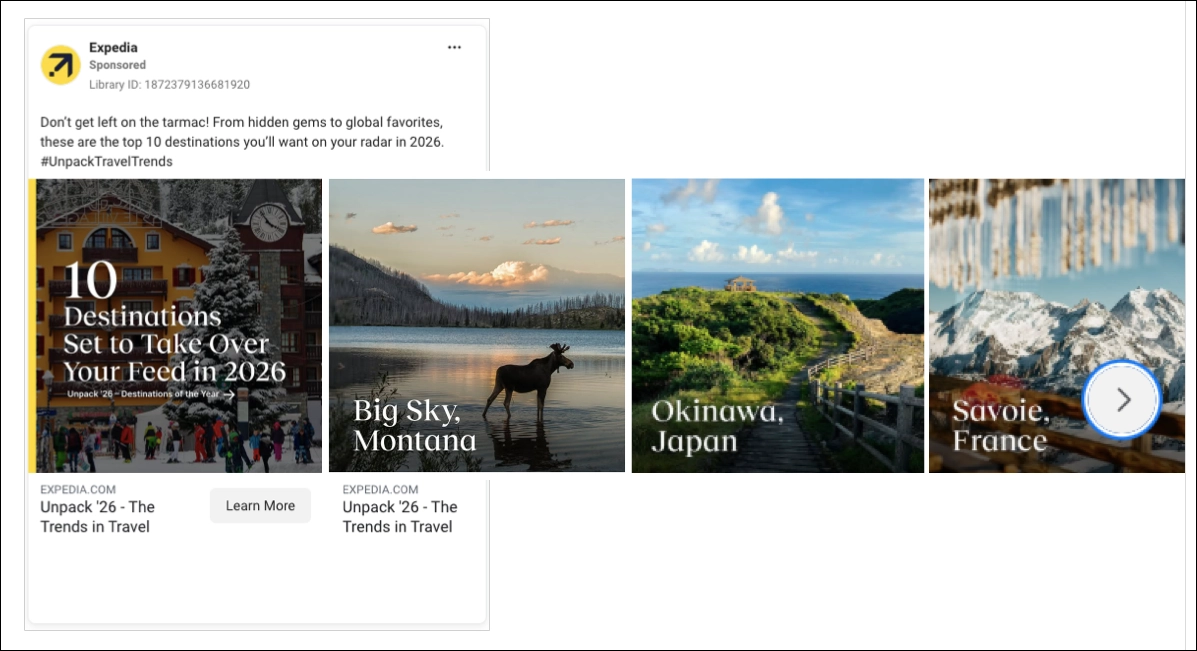
Crisp images and minimal text encouraged swiping. A clear call to action turned browsing into interest, and the campaign reached tens of thousands of viewers within weeks.
Carousel ads often suit:
- Product ranges.
- Feature walkthroughs.
- Travel, fashion, and lifestyle brands.
4 Story Ads: Full-Screen and Momentum Driven
Story ads fill the entire screen and appear between user stories. This format creates focus and urgency, which suits time-bound offers or experiences.
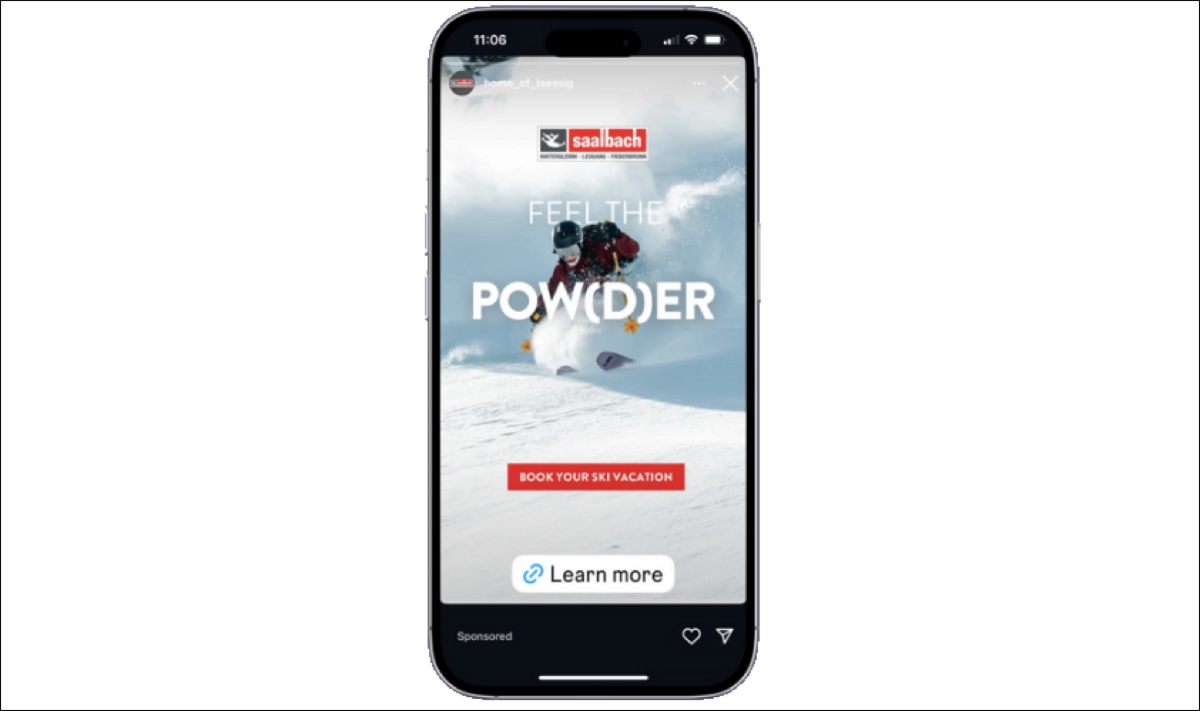
A winter tourism campaign from Saalbach Hinterglemm Leogang Fieberbrunn used fast-moving ski footage and bold text overlays. The ad carried a clear booking prompt and pulled viewers into the experience within seconds.
Story ads perform well when brands:
- Use vertical video.
- Add text overlays for silent viewing.
- Guide viewers with clear prompts.
5 Collection Ads: Built for Shopping
Collection ads suit eCommerce brands with multiple products. They combine video or images with a product catalogue that users can browse without leaving Instagram.
The beauty brand Klairs used influencer-created content and promoted it as branded ads. Viewers could tap and buy directly from their feed. This lifted return on ad spend by 1.8 times and shortened the buying journey. (2)
Collection ads help brands:
- Showcase product ranges.
- Reduce friction in buying.
- Support social commerce goals.
6 Explore Ads: Discovery-Led Visibility
Explore ads appear when users search for new content. These ads suit brands that want discovery rather than immediate action.
Kenzo used Explore ads for a spring fragrance campaign. Soft visuals and slowed video matched seasonal interest and user intent. The ad felt timely and relevant while staying visually calm.
Explore ads work best for:
- Brand discovery.
- Seasonal campaigns.
- Visual storytelling.
Choosing the right types of Instagram ads helps brands shape attention at every stage. When format matches intent, ads feel less like promotions and more like part of the feed.
How to Run Instagram Ads Using Meta Ads Manager?
For many businesses, the first attempt at how to run Instagram ads feels intimidating. Meta Ads Manager changes that once you understand the flow.
Here, we explain how to run ads on Instagram using Meta Ads Manager in a way that feels manageable, even for first-time advertisers.
1 Set Your Objective: Awareness, Traffic, Leads, or Sales
Every campaign starts with a goal. Meta asks this question early because the objective shapes how your Instagram ad behaves and who sees it. Choosing the right objective makes advertising on Instagram far more predictable.
Inside Meta Ads Manager, you will see these options:
- Engagement: Works well for video views, post interactions, and page activity.
- Traffic: Sends users to a website, landing page, or app.
- Awareness: Focuses on visibility and recall for your brand.
- App promotion: Encourages installs or in-app actions.
- Sales: Drives purchases, product views, or sales conversations.
2 Define Your Audience: Location, Age, Interests, and Behaviours
After setting the objective, Ads Manager asks who should see your ad. This step decides the reach quality more than the creative alone.
You can let Meta choose audiences automatically, or you can define them yourself. Manual targeting works well when you know your market. Audience options include:
- Location, age range, and gender.
- Interests linked to behaviour and activity.
- Custom audiences from website visitors or Instagram engagement.
- Lookalike audiences based on people similar to your existing customers.
Lookalike audiences help brands scale Instagram paid ads while staying relevant.
3 Set Budget and Schedule: Daily or Lifetime Spend
Budget planning gives your campaign structure. Ads Manager offers two clear choices.
- Daily budget: Meta spends a similar amount each day while the campaign runs.
- Lifetime budget: You set start and end dates, and Meta spreads spend across the full period.
Daily budgets suit ongoing campaigns. Lifetime budgets fit promotions or launches. Both options support controlled spending while learning how to run ads on Instagram without surprises.
4 Create Your Ad: Visuals, Copy, and Call to Action
This is where your Instagram ad takes shape. You choose the Instagram account, upload creatives, write captions, and select a call to action.
The interface adjusts based on the objective and the types of Instagram ads you select. A single image ad looks different from a collection or video ad. A live preview appears on the screen, which helps you review placement across Feed, Stories, and Reels.
Once satisfied, you publish the ad. Meta reviews it before approval, after which performance tracking begins inside Ads Manager.
5 Publish and Track Results Inside Meta Ads Manager
After launch, Ads Manager becomes your control centre. You can track impressions, clicks, leads, or sales based on your objective.
GrowEasy tip: AI-led insights remove much of the manual effort. GrowEasy suggests high-performing audiences, creatives, and bidding approaches based on real-time patterns. With GrowEasy, brands can:
- Launch AI-powered ads in minutes.
- Create banners, videos, copy, and forms.
- Qualify leads automatically.
- Adjust targeting and delivery continuously.
The system runs optimisation throughout the day and supports multiple languages, which helps brands reach regional audiences across India. A free plan supports small businesses, while agency plans start at ₹14,999 or $199 per month for growing teams.
Who Sees Your Instagram Ads?
When a brand runs Instagram ads, who exactly sees them? Understanding audience targeting explains why some campaigns perform steadily while others fade out.
Instagram gives advertisers clear control over who sees each Instagram ad, and AI has taken this control several steps further.
Audience Targeting Basics
Meta Ads Manager allows brands to choose audiences using signals that match real behaviour rather than guesswork. Basic targeting usually includes:
- Location such as city, state, or country.
- Age brackets aligned with buying intent.
- Interests based on content interaction.
- Behaviours such as shopping activity or app usage.
Custom Audiences vs Lookalike Audiences
Custom and lookalike audiences help brands reach people who already show interest or resemble existing customers. Both play different roles while running Instagram paid ads.
What Is a Custom Audience?
A Custom Audience includes people who already know your brand in some form. These users may have visited your website, engaged with your Instagram posts, watched your videos, or shared their contact details earlier.
Custom Audiences help brands reconnect with warm users who already recognise the brand. Common sources for Custom Audiences include:
- Website visitors
- App users
- Customer lists
- Instagram or Facebook engagement
How to Create Custom Audiences?
The process starts inside Meta Ads Manager or Business Manager. From the Audiences section, you select Create Custom Audience and choose the source type. Each source follows a slightly different setup flow, based on where the data comes from.
Once created, this audience updates automatically as new users interact with your brand. That ongoing refresh helps brands keep ads relevant without manual effort.
What Is a Lookalike Audience?
A Lookalike Audience helps brands reach new people who behave like existing customers. Meta studies a source audience and finds users with similar patterns, interests, and activity.
This supports growth while maintaining relevance.
How to Create Lookalike Audiences?
Lookalike creation starts with an existing Custom Audience. Inside the Audiences section, you choose Create Lookalike Audience, select the source audience, and define the target location. You then choose how closely the new audience should match the source:
- 1% delivers the closest match
- 10% reaches a broader group
Lower percentages suit precision. Higher percentages suit reach. This flexibility supports both testing and scaling ads.
How Does AI Improve Audience Precision?
AI has reshaped how audiences are built and reached on Instagram. Manual targeting now works alongside systems that adjust continuously. Here is how AI sharpens audience precision:
- Dynamic audience segmentation: AI groups users based on real-time behaviour rather than fixed demographics. Someone engaging with fitness content today may enter a relevant segment immediately.
- Predictive analytics: AI studies past activity to forecast trends and future behaviour. Brands can publish content aligned with rising interest before it peaks.
- Hyper-personalisation: Ads adapt to individual preferences. Headlines, visuals, and formats shift based on previous interactions.
- Advanced targeting tools: Meta’s Advantage+ uses automation to test variations and direct spend towards combinations that perform better.
- Influencer selection support: AI checks audience quality and engagement patterns to identify creators with genuine reach.
- Enhanced interaction: AI-driven chat tools handle instant replies, product suggestions, and routine questions through DMs.
- Precise timing: AI tracks activity patterns and schedules delivery when users are most active.
Cost of Instagram Ads in 2026
| Metric | What It Means | Average Cost in 2026 |
| CPC (Cost Per Click) | Amount paid when someone clicks your Instagram ad. This includes link clicks, post interactions, and image views. | $1.32 per click |
| CPM (Cost Per Thousand Impressions) | Amount paid for every 1,000 times your ad appears on screen. | $14.03 per 1,000 impressions |
| CPL (Cost Per Lead) | Amount paid for each lead collected through lead generation campaigns. | $13.81 per lead |
Factors That Affect Instagram Ad Costs
Several elements shape pricing and performance.
- Industry: Competitive industries often see higher CPC and CPL.
- Audience selection: Broad audiences cost less than narrow, high-intent groups.
- Creative quality: Clear visuals and relatable messaging reduce wasted spend.
- Bidding strategy: Automated bidding often stabilises costs over time.
- Ad format: Video and Reel placements may cost more yet deliver stronger engagement.
Optimising Instagram Ads for Maximum Conversions
Running ads gets easier once campaigns go live, yet real success comes from optimisation. In 2026, AI plays a central role in helping brands sharpen performance without manual overload.
1 Creative Testing with AI
Creative fatigue shows up quickly on Instagram. AI-led creative testing helps brands stay relevant at scale. With GrowEasy, brands can create multiple creative versions without long production cycles.
- Generate diverse assets:
Video Ads by GrowEasy help teams produce multiple image and video versions from a single idea.
AI suggests scripts based on campaign inputs, trained actors deliver the message, and professional editors handle final production. Brands select the concept, place the order, and receive ready-to-use creatives.
- Focus on high-converting formats: UGC-style videos between 15 and 30 seconds, carousel ads, and full-screen Stories match user behaviour and feel native during scrolling.
2 Improving CTR and Quality Score
Click-through rate and quality score influence delivery and cost. Ads that receive attention early often cost less over time. Brands improve CTR by:
- Using visuals that match organic content styles.
- Keeping messages clear within the first few seconds.
- Aligning captions with user intent rather than brand language.
- Testing multiple hooks across creatives.
AI tracks which combinations earn clicks and engagement, then prioritises those variations.
3 Using AI-Powered Bidding and Budget Allocation
AI-led bidding systems adjust spend based on performance patterns. GrowEasy uses automated bidding logic to:
- Shift budget towards creatives, bringing stronger responses.
- Reduce spend on underperforming ad sets.
- Balance delivery across placements without manual tweaks.
4 Conversion Tracking and Performance Optimisation
Clear tracking shows which ads lead to form fills, messages, or purchases. AI improves tracking by:
- Connecting ad clicks with actions taken later
- Identifying drop-off points inside funnels
- Adjusting delivery timing based on user activity
For teams using GrowEasy, optimisation becomes an ongoing process rather than a manual task. This shift allows brands to focus on growth while AI handles the heavy lifting behind every Instagram ad.
Why GrowEasy Is Your Best AI Tool for Instagram Ads?
Running ads on Instagram in 2026 no longer needs large teams or constant manual effort. GrowEasy supports businesses at every stage, from first launch to ongoing scale, while keeping the experience simple and practical.
Teams can now:
- Create and publish ads quickly using AI-guided workflows, from idea to live campaign.
- Adjust campaigns throughout the day, shifting budget towards ads that attract stronger responses.
- Run ads in multiple Indian languages to connect with regional audiences more naturally.
- Capture and manage leads from ads on Instagram in one place, without extra software.
- Have access to AI-written scripts, trained actors, and professional editing help ads look polished and persuasive.
- Get a free plan that supports small businesses, while agency plans start at ₹14,999 or $199 per month.
- Choose your own ad account or GrowEasy’s agency account, with white-labelling for client work.
FAQs
How Do You Measure Instagram CPC?
CPC shows how much you pay for each click on your Instagram ads, including link clicks and interactions.
CPC = Total spend ÷ total clicks
Which Instagram Ad Formats Drive the Highest ROI?
ROI depends on the goal, yet these formats perform reliably:
- Reels ads: Strong for reach and product discovery.
- Stories ads: Good for fast actions and sign-ups.
- Carousel ads: Effective for e-commerce and feature-led ads.
What Tools Help Manage Instagram Ads at Scale?
As campaigns grow, automation becomes essential.
- Meta Ads Manager handles setup and reporting.
- AI tools manage bidding and creative testing.
- GrowEasy brings creation, optimisation, and lead tracking into one place.
Closing Thoughts
Instagram advertising in 2026 rewards brands that act with clarity rather than volume.
GrowEasy helps you reach that point faster. It brings AI-led creation, precise targeting, and continuous optimisation into one workflow. Instead of reacting to performance drops, your campaigns adjust on their own.
If your goal is to build ads on Instagram that deliver steady growth rather than short spikes, GrowEasy gives you the control and confidence to scale. Start building campaigns that work with the platform, not against it.
Building in India 🇮🇳

© 2026 AUTOTME SOFTWARE PRIVATE LIMITED. All rights reserved.